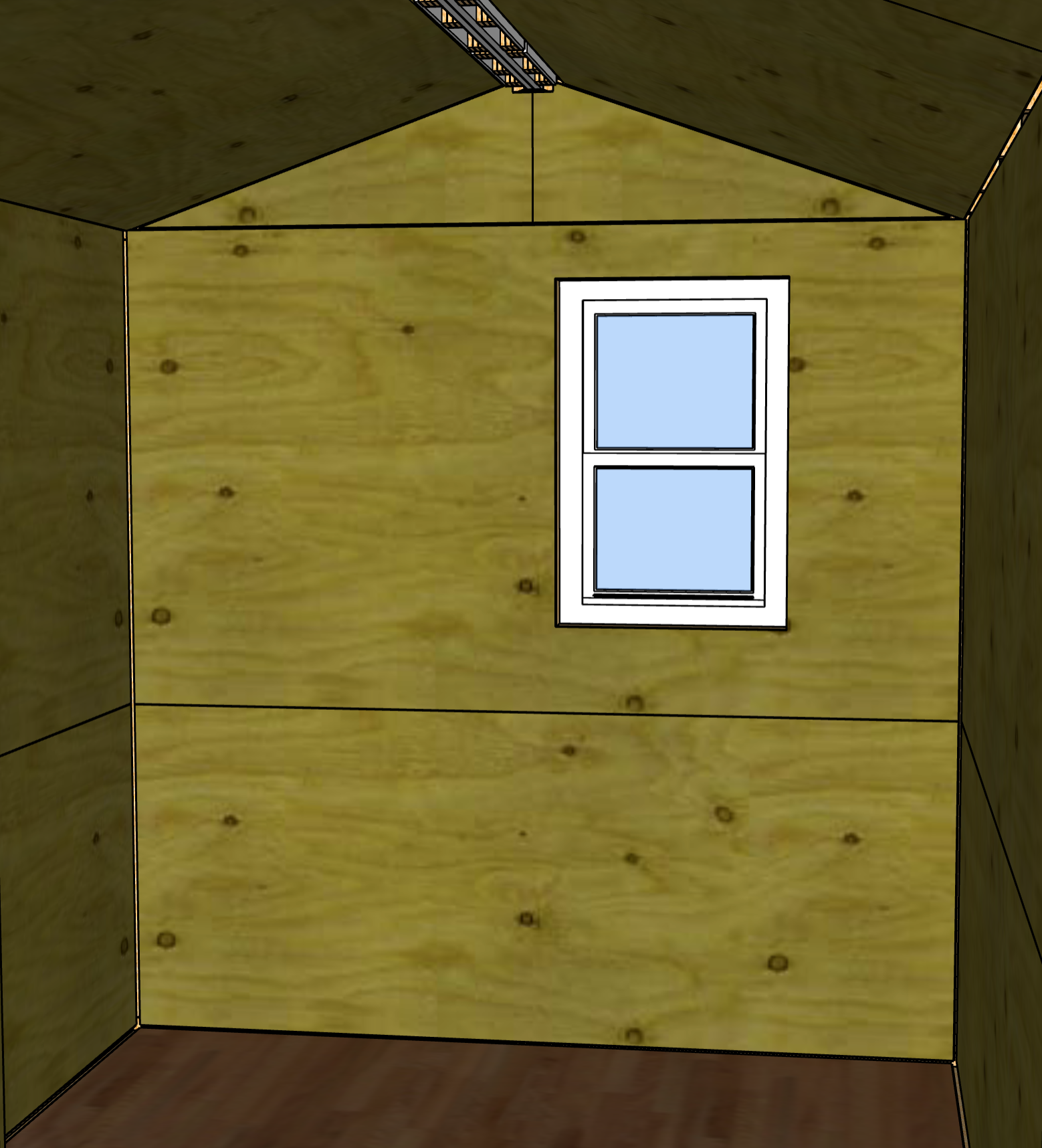
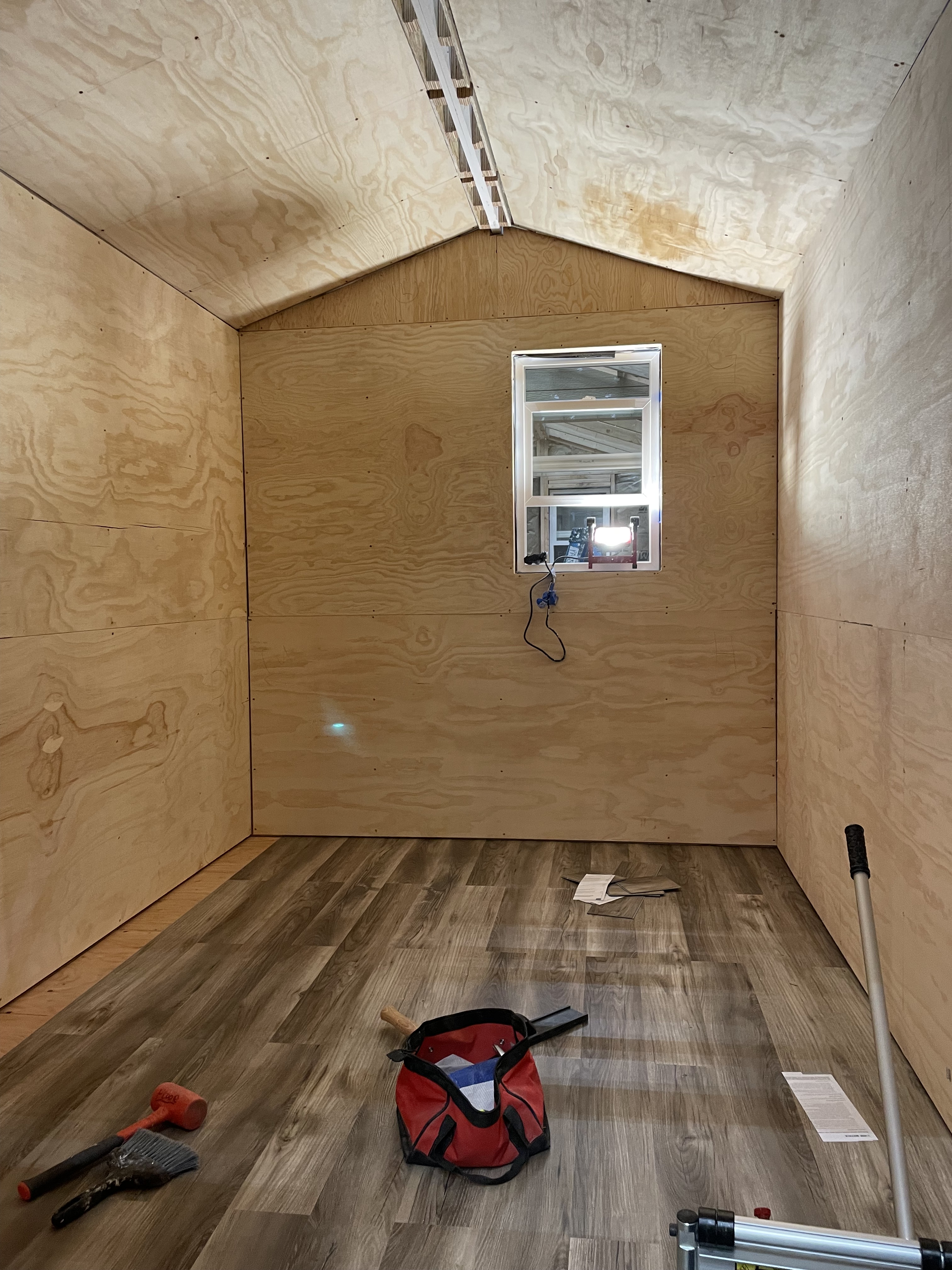
I created a SketchUp model of the Tiny Homes at Sound Foundations NW, where they recently built their 500th Tiny Home. Amazing achievement!
Here are some screenshots of the model compared to real life construction:
And an animation of how a Tiny Home is built using the SketchUp model. This was fun to learn how to do!
I’ve really enjoyed building this model in SketchUp – It’s a great way to flex my love of details, modelling things of unusual size (see chocolate bars), and getting to build something. We’ll be using it to help create some manuals with 3D instructions for tilting up all 4 walls, and getting the roof structure on the house.
I’m a Team Lead / Lead Volunteer in both organizations, and I love being able to contribute something meaningful back to the community. This post is going to cover the amazing work that Facing Homelessness do, with the generous help of volunteer hosts in Seattle.
How does the BLOCK Project work?
The BLOCK Project builds permanent housing as an Accessory Dwelling Unit (ADU, aka “granny flat”) in a willing host’s backyard. The BLOCK project builds and pays for the ADU, including permitting and setting up utilities; they are also responsible for maintaining the home throughout its lifetime.
After the BLOCK home is built, Facing Homelessness reach out to vetted agencies to connect the host with a new tenant experiencing homelessness. The home owners are integral to this process and become part of a support network for the new tenant, which also includes case management and regular contact from Facing Homelessness for maintenance and check ins. The BLOCK home project has a 95% success rate of tenants remaining in permanent housing.
Each home costs $75k in material and site costs, which is significantly cheaper than the next-cheapest permanent housing option, at $300k.
The BLOCK homes are sustainable, fully contained tiny-home sized dwellings measuring 8’ x 16’ ft (or 2.4m x 4.8m, a total area of 130 sq feet / 12 sq metres) with a kitchen, bathroom and living area, plus an additional deck and storage room outside. They’re built for a single occupant and designed small, to fit into as many backyards as possible.
BLOCK homes are connected to the electricity grid and water utilities, but also have solar panels (net zero!) and rainwater collection. They are built with highly sustainable materials including Juniper – an invasive wood in the Pacific Northwest – for decking and siding, and they use sheep’s wool for insulation. The windows are triple-paned and European-style tilt-opened for insulation and temperature regulation. Facing Homelessness recently achieved Living Building Challenge certification for the BLOCK homes, which is the greenest and most sustainable certification possible.
In addition to all of their sustainable features, the BLOCK homes are just beautiful to look at. The Juniper wood siding has lots of stunning character, and everything is stained rather than painted. Each home installation includes hardscaping and landscaping, a stone patio and a beautiful garden of native plants. This is block home 15 nearing the end of its assembly phase.
How are they built?
The homes are built in two phases: the first is constructing prefabricated panels in a factory, and the second is prepping the site and assembling the house. That includes prep for electrical and water utilities, moving all the prefab panels to site, assembling the home together, and landscaping.
Both phases are heavily reliant on volunteers; there are only two (!) paid construction managers at Facing Homelessness who are often managing multiple jobs, such as coordinating volunteers, prepping tilt up days, conducting home inspections and repairs, and managing the factory.
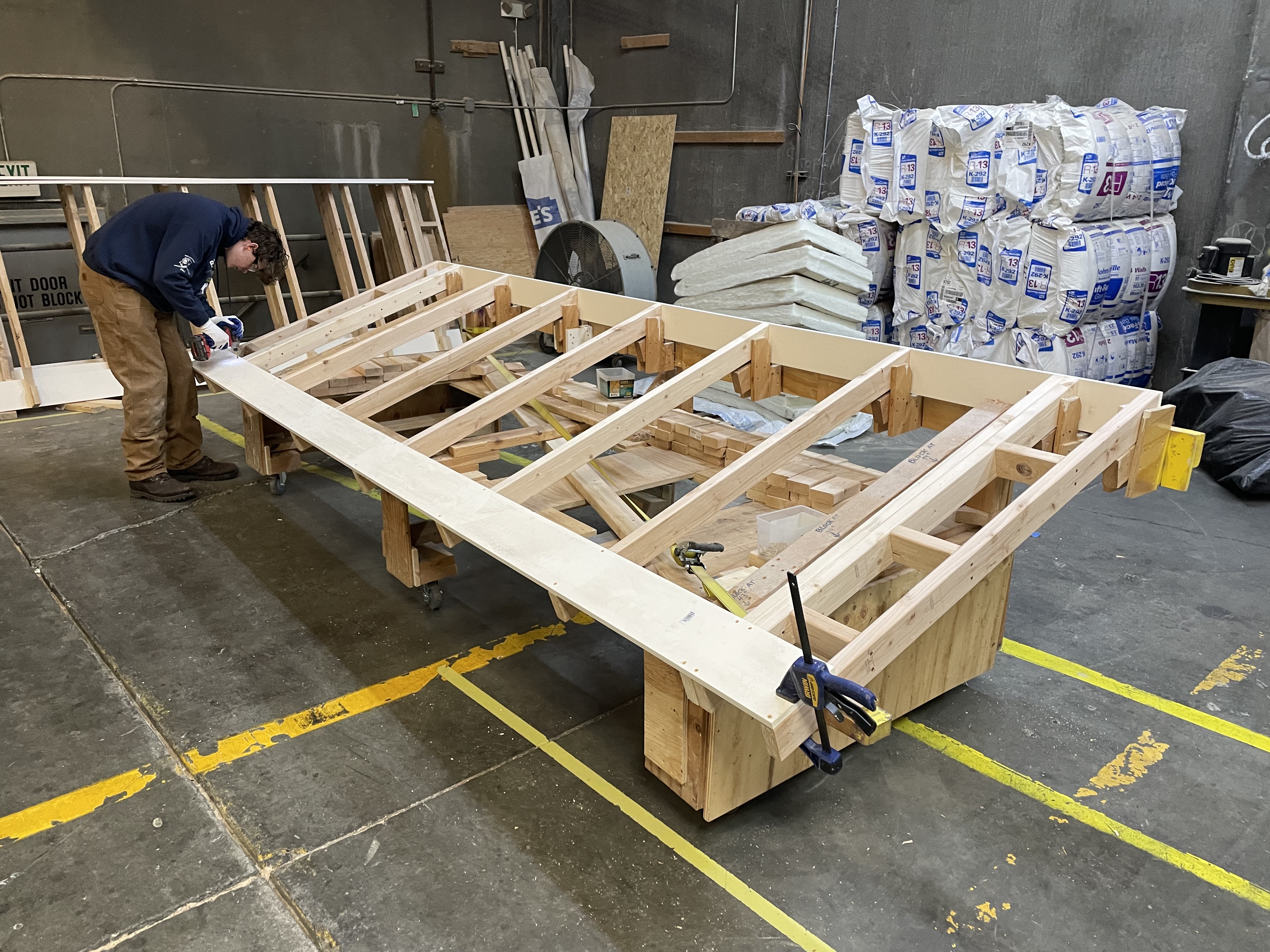
The assembly is described as “IKEA on steroids” and is often done by groups of volunteers with no construction experience. The instruction guides for each panel are full of helpful diagrams. Volunteers are guided by a Lead Volunteer who trains them on various tools (e.g. nail guns, screw guns, domino) and checks for quality control. The panels are built on jigs, or templates, which allows each group to create identical wall, floor, ceiling, deck or siding panels that will later be assembled on site. The houses are reasonably complex; there are dozens of different jigs used in the factory, and there’s a set of booklets to describe how each panel is built and how it all fits together onsite.
My experience volunteering with the BLOCK Project (and how you can volunteer!)
I really like volunteering at the BLOCK Project because it shows how complex a house is to build, with so many moving parts that all need to be precise. They’ve somehow made it straightfoward for people with no experience to build meaningful parts of a house, which is impressive when the house needs electrical systems, plumbing, ventilation, insulation, fixtures, and forms a tight, weatherproof envelope.
I’m currently a Lead Volunteer at the BLOCK Project and I help to guide groups of volunteers through building on the jigs. A lot of people are new to construction when they volunteer, and it’s fun for them to see a wall or section being built. We get volunteers to sign their name on the inside of a panel when they’ve finished building it.
I also spend extra time weekly with additional Factory/Shop support – helping to clean, reorganize, build new shelving, sort & catalogue materials, and random maintenance.
There’s a cyclic nature to the BLOCK home; there will be periods of a few months where the factory in Georgetown is active building all of the home components, then other times where the focus is on a new housing site, in prep or assembly. If you’re in the Seattle area, you can sign up for volunteer slots on their website.
I love the community-minded drive behind the BLOCK Project, and I’m fascinated with the potential to construct lots of permanent housing in an area where housing is expensive and scarce. I am eager to see where Facing Homelessness and the BLOCK Project go from here.
After 6 years working at Amazon, I decided to take a career break in late 2022 to explore some of my interests – a cross section of sustainability and housing. I’ve been volunteering at two different Seattle-based housing nonprofits with my time off:
Sound Foundations NW, which focuses on building tiny homes for people who are experiencing homelessness.
This post is focused on the tiny home builder Sound Foundations NW, which has an amazing factory in SODO in south Seattle. They churn out 4 tiny homes per week almost entirely on volunteer labour, and I’ve been volunteering once or twice a week since August 2022. I had heard about Seattle’s tiny houses a while ago, but had not had the chance to visit until last year.
Why Tiny Homes?
The tiny homes are an emergency transitional measure to get someone living in a tent or vehicle off the streets until they can move into more permanent housing. Residents are put into tiny home villages, where they have access to their own secure and lockable tiny house. The villages usually hold about 30-60 houses, have separate kitchen and bathroom facilities, food, a mailing address, a supportive community, and social services.
People stay in the tiny homes for 114 days on average, and almost 50% move on to permanent housing after they leave, compared with the national emergency shelter average of 12%. Overwhelmingly, people experiencing homelessness prefer tiny homes to traditional shelters. Each tiny home built in the Sound Foundations NW factory can help 3 people on a path out of homelessness every year.
What does a Tiny Home look like?
Each tiny house measures 8’ x 12’ (or 2.4m x 3.6m). It’s sturdy and well-built, and large enough to hold a bed and shelving unit with space for personal belongings.
On the outside, they have a weatherproof barrier, siding, trim, a shingled roof with eaves to protect from water runoff, and a lockable door. They are professionally spray painted a variety of different colours to mix and match when in the village.
They’re finished to a nice standard, with vinyl wood flooring, wooden trim, painted walls and two windows (front and back) for cross ventilation. The houses are wired up with an electrical socket so that residents can charge devices and plug in a heater during winter.
Each house costs $4300 in materials (2023 pricing), and takes around 174 hours of work to complete. The factory is run almost entirely on volunteer labour. There is only one paid employee: Barb Oliver, who’s been running operations in the current location since 2020.
Volunteering at the Factory
Volunteering is open to everyone over the age of 16! Some people come in on a regular basis, but there are many people who volunteer just once, through corporate or community groups. Individuals also come in after hearing about the factory and wanting to see it in person.
Barb takes first-timers on a tour of the factory, and also explains how the tiny house villages work. Most of the time, a corporate or community group will be involved in a “tilt up”: we take a pile of raw materials, build a bunch of individual components, and by the end of the day we will end up with this:
As someone who loves to see things work well at scale, I am honestly amazed at how this works. Many of the groups have zero experience in construction or using power tools. The factory has only one paid employee. How do we end up with a framed house after 6 hours?
The factory has a series of “jigs” – aka templates – for different parts of the house: walls, floor, roof frames, etc. Almost all of the materials that we use in the jigs are pre-cut in advance and set up to be easily accessible on a tilt up day. A more experienced volunteer takes the role of “Team Lead” and will help between 1-3 new volunteers build a piece of the house, such as a side wall. The team lead will teach them how to use a nail gun, supervise as they start attaching pieces together, and do any troubleshooting or finish work. By lunchtime, there will be a completed side wall.
After lunch, the group works together to bolt the newly-built walls to the newly-built floor. We then attach the roof to the hold the frame together. Not only is the house framing done, but the walls are already weatherproofed, sided, and joined together.
If there’s a tilt up on days I volunteer, I am often a Team Lead – but I like being a regular crew member. My favourite things to do on the houses are adding the floors and interior trim, when the unfinished house starts to look like a polished room.
If you are in the Seattle area and would like to find out more, sign up for the Sound Foundations NW newsletter, drop by the factory (tours run every day except Friday) or sign up for a volunteer shift. New spaces are released every Wednesday for the following week, via the newsletter.





 coding, cake and travel